
Engagement Rings
Expert Recap: How to Choose a Center Stone for an Engagement Ring
Published: Oct 28, 2025
Introduction
Stunning! That’s how you want the center stone of an engagement ring to feel. But choosing that stone can feel overwhelming. Did you know that over 80% of engagement rings feature a diamond as the center stone, with only a small share using colored gemstones or alternative stones?
In this guide, you’ll learn:
The key qualities (4 Cs, shape, source) that influence a stone’s beauty and price
How trends and innovations (e.g. lab-grown, fancy colors) are shifting choices
Practical steps you can follow to narrow your options
How to collaborate with a jeweler (like Peran & Scannell Jewelers) to land on a choice you’ll treasure
Let’s dive in.
1. Understanding the fundamentals: the 4 Cs + more
When choosing a center stone, many people begin with the classic “4 Cs” — Cut, Color, Clarity, and Carat. But there are additional considerations too.
1. Cut
Cut is often the most important for sparkle — a well-cut stone reflects light beautifully.
Even a stone with average color or clarity can look spectacular if the cut is excellent.
Pay attention to “ideal,” “excellent,” or “very good” cut gradings.
2. Color
Color grades (for diamonds) typically run from D (colorless) down through the alphabet.
Stones closer to colorless tend to command premium prices.
But many people find the “near colorless” range (e.g. G, H) offers excellent value.
3. Clarity
Clarity grades assess internal flaws (inclusions) or surface blemishes.
Many inclusions are invisible to the naked eye at practical grades (e.g. VS2, SI1)
Prioritize avoiding visible flaws rather than chasing the top clarity grade.
4. Carat (Weight)
Carat is simply the weight, and by extension, size, of the stone.
Price tends to scale disproportionately with carat — the jump from 1.0 → 1.5 ct may cost much more than you'd expect.
Decide how large you want the stone to appear, but balance that with cut, color, clarity.
5. Shape / Faceting Style
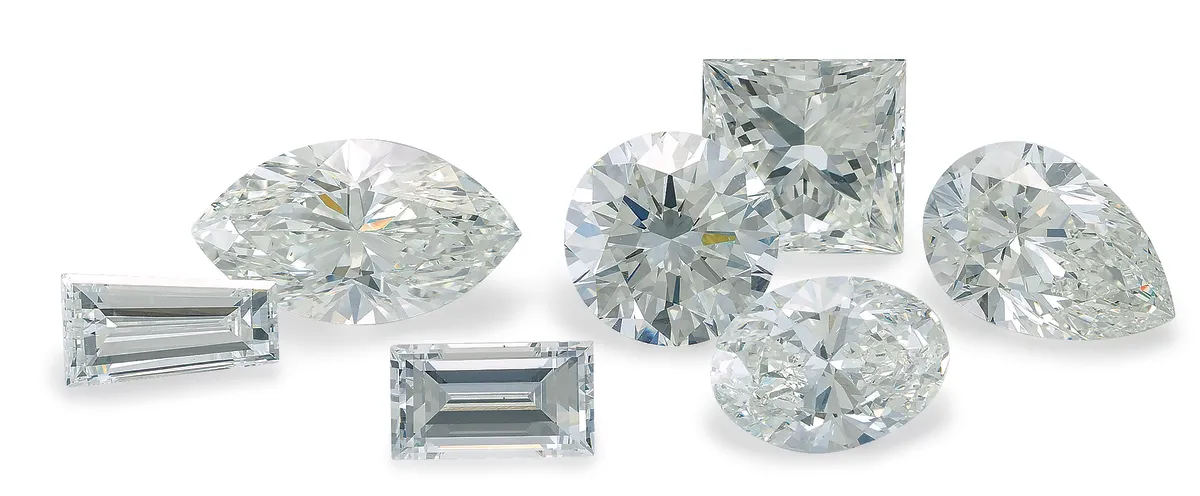
Round brilliant remains the most popular shape — more than half of all engagement rings feature round center stones. (International Gem Society)
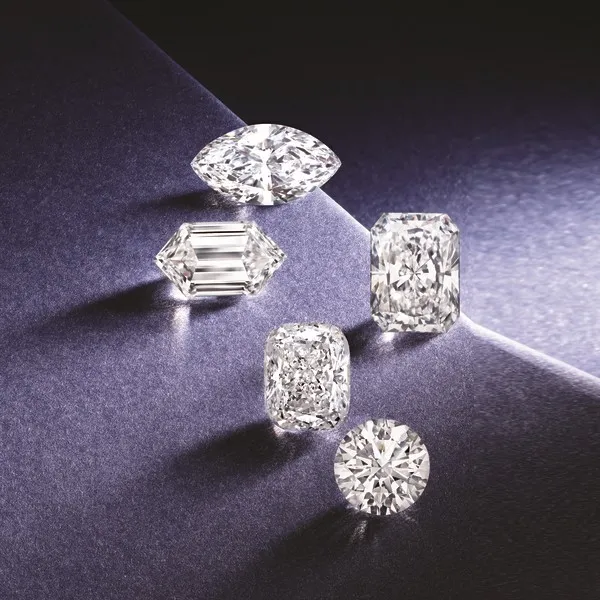
Other popular shapes include princess, oval, cushion, emerald, etc.
Each shape has trade-off in brilliance, price per carat, and how it fits in settings.
6. Alternative Stones & Lab-grown options
Lab-grown diamonds are chemically and visually equivalent to natural diamonds but tend to cost less.
Their market share is growing; many couples are choosing lab-grown to allocate more budget to size or setting.
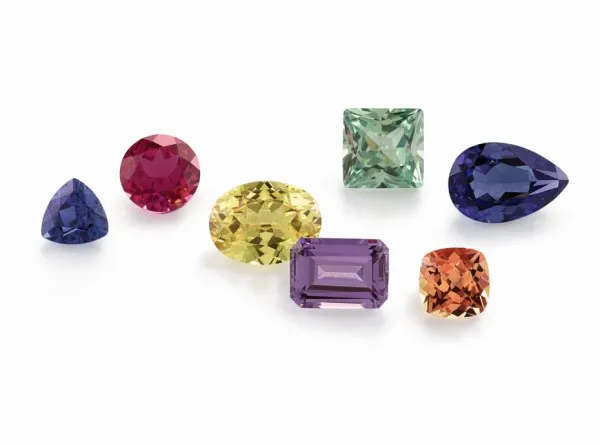
Colored gemstones (sapphires, emeralds, morganite, etc.) or exotic diamonds (salt & pepper, fancy colors) offer uniqueness.
A 2025 trend report notes increased interest in colored stones and unusual cuts. (Vogue)
2. Trends and what’s shifting
Understanding what’s trending can help you feel confident, not trapped, by fashion:
Ethical sourcing & sustainability: Many buyers now ask about origin, responsible mining, or lab-grown alternatives.
Colored stones & unique diamonds: The push toward individuality means more couples pick sapphires, teasers of mixed metals, or salt & pepper diamonds. (Rapaport)
Minimalist settings: With the center stone becoming the focal point, simpler bands and fewer accents are gaining popularity.
This doesn’t mean you must chase trends—but being aware helps you make a stone that’s both timeless and personally meaningful.
3. Practical steps: How you pick your stone
Here’s a step-by-step process you can apply as you shop:
Step 1: Prioritize your preferences
Decide what matters most to you: sparkle (cut), size (carat), purity (clarity/color), or uniqueness (shape, color).
Your top priority helps you make trade-offs in other dimensions.
Step 2: Set a realistic budget range
Based on your financial comfort, define a low, middle, and high point.
Within that range, commit to selecting the best stone you can.
Add a buffer (5–10%) for setting, customization, taxes, etc.
Step 3: Compare options side by side
Always view real stones in natural light—images or diagrams can mislead.
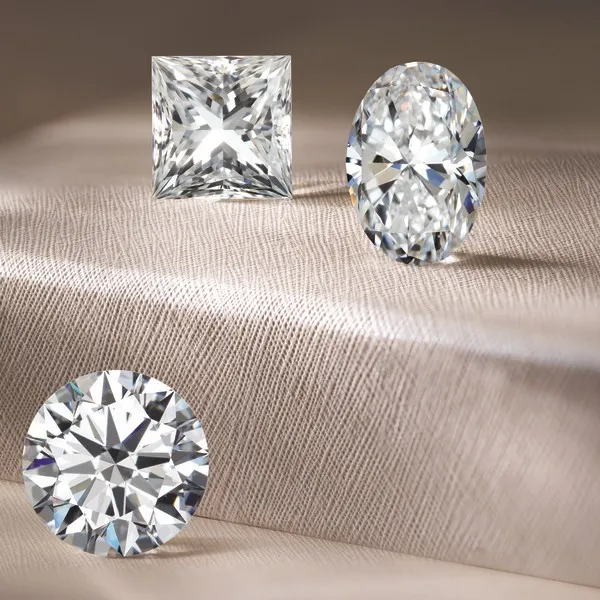
Bring your top 2–3 stones and compare them—spot differences in brilliance, flaws, color tint.
Ask the jeweler to show magnification (10×) and certification.
Step 4: Ask the right questions
Request a full grading report (e.g. GIA, AGS)
Ask for light performance or ideal cut certification
Inquire about stone origin, treatments, any enhancements
Confirm warranty, return policy, and resizing terms
Step 5: Decide on setting compatibility
Ensure the shape and size you select can be well supported by the intended setting (prong, bezel, halo, etc.)
Some shapes (e.g. marquise) need extra protection against chipping
Settings may require tweaks (e.g. prong height, number of prongs) depending on stone
Step 6: Finalize the selection & lock it in
Once you choose your stone, have the jeweler hold or reserve it while you finalize the setting
Get a contract or document that describes the stone (cert grade, weight, shape)
Walk through the design before the setting begins—approve sketches or wax models
By following these steps, you turn what seems intimidating into a structured, confidence-building process.
4. How a jeweler can help—and how to work with them
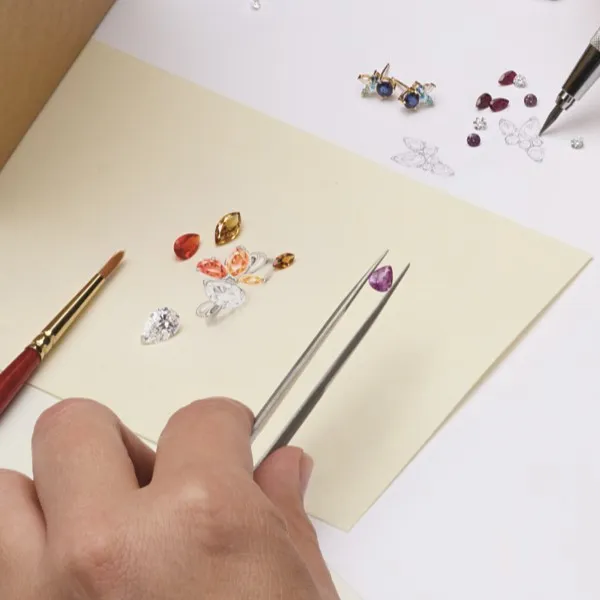
A great selection process is magnified when you have a skilled jeweler partner. Here's how to make that collaboration effective:
Transparent communication: Share your priorities (cut, size, budget) and ask for choices within them
Trade-off explanations: A good jeweler can show you “if you drop one clarity grade, this is what you gain elsewhere”
Mockups or previews: They can show you how your stone will look in your preferred setting before committing
Access to stone inventory: Alongside local selection, a jeweler may have access to broader inventories or wholesale sources
Aftercare & service: The jeweler should offer inspection, cleaning, prong checks, resizing support
When you apply the knowledge from this post and partner with a trusted jeweler (for example, Peran & Scannell Jewelers), you’re far more likely to end up with a stone—and ring—you’ll love.
5. Example trade-offs & decision scenarios
To illustrate how you might balance factors, here are example scenarios many buyers face:
Scenario A: You want maximum sparkle for your dollar
Prioritize cut over carat or color
Accept a slightly lower color grade (e.g. H) and clarity (e.g. VS2)
Choose a simpler setting so costs go toward stone quality
Scenario B: You want standout size
Go for a higher carat stone
Accept a lower clarity or color grade
Use a halo or smaller accent diamonds to add visual impact
Scenario C: You want uniqueness
Choose a colored gemstone or fancy diamond shape
Expect to pay premium for rarity or design
Ensure durability is sufficient for daily wear
These scenarios help you see how shifting one factor lets you customize your result.
6. Mistakes to avoid
Overemphasizing a single “best” factor: If you push all budget to carat, you may end up with a dull stone.
Ignoring light performance: Spectral brilliance matters.
Not verifying grading reports: Always demand full reports.
Picking exotic stones without research: Some gems are soft or less durable.
Assuming all settings suit all shapes: Some shapes need special metal work.
Skipping aftercare terms: You’ll want support over the years.
Conclusion
Choosing a center stone for an engagement ring is part art, part science—and entirely personal. You’ve learned how to weigh the 4 Cs (plus shape and alternative options), track current trends, follow practical steps to narrow choices, and leverage a jeweler’s expertise to realize your vision. When you bring your priorities, questions, and budget to the table—and pair that with a trusted jeweler—the result will be a center stone that delights.
If you’d like one-on-one help comparing real stones, customizing settings, or selecting among options, please call, text, or email Peran & Scannell Jewelers. Let us know if this article helped—you deserve a center stone you’ll treasure forever.
Which qualities matter most to you in your ideal center stone?
Stunning! That’s how you want the center stone of an engagement ring to feel. But choosing that stone can feel overwhelming. Did you know that over 80% of engagement rings feature a diamond as the center stone, with only a small share using colored gemstones or alternative stones?
In this guide, you’ll learn:
The key qualities (4 Cs, shape, source) that influence a stone’s beauty and price
How trends and innovations (e.g. lab-grown, fancy colors) are shifting choices
Practical steps you can follow to narrow your options
How to collaborate with a jeweler (like Peran & Scannell Jewelers) to land on a choice you’ll treasure
Let’s dive in.
1. Understanding the fundamentals: the 4 Cs + more
When choosing a center stone, many people begin with the classic “4 Cs” — Cut, Color, Clarity, and Carat. But there are additional considerations too.
1. Cut
Cut is often the most important for sparkle — a well-cut stone reflects light beautifully.
Even a stone with average color or clarity can look spectacular if the cut is excellent.
Pay attention to “ideal,” “excellent,” or “very good” cut gradings.
2. Color
Color grades (for diamonds) typically run from D (colorless) down through the alphabet.
Stones closer to colorless tend to command premium prices.
But many people find the “near colorless” range (e.g. G, H) offers excellent value.
3. Clarity
Clarity grades assess internal flaws (inclusions) or surface blemishes.
Many inclusions are invisible to the naked eye at practical grades (e.g. VS2, SI1)
Prioritize avoiding visible flaws rather than chasing the top clarity grade.
4. Carat (Weight)
Carat is simply the weight, and by extension, size, of the stone.
Price tends to scale disproportionately with carat — the jump from 1.0 → 1.5 ct may cost much more than you'd expect.
Decide how large you want the stone to appear, but balance that with cut, color, clarity.
5. Shape / Faceting Style
Round brilliant remains the most popular shape — more than half of all engagement rings feature round center stones. (International Gem Society)
Other popular shapes include princess, oval, cushion, emerald, etc.
Each shape has trade-off in brilliance, price per carat, and how it fits in settings.
6. Alternative Stones & Lab-grown options
Lab-grown diamonds are chemically and visually equivalent to natural diamonds but tend to cost less.
Their market share is growing; many couples are choosing lab-grown to allocate more budget to size or setting.
Colored gemstones (sapphires, emeralds, morganite, etc.) or exotic diamonds (salt & pepper, fancy colors) offer uniqueness.
A 2025 trend report notes increased interest in colored stones and unusual cuts. (Vogue)
2. Trends and what’s shifting
Understanding what’s trending can help you feel confident, not trapped, by fashion:
Ethical sourcing & sustainability: Many buyers now ask about origin, responsible mining, or lab-grown alternatives.
Colored stones & unique diamonds: The push toward individuality means more couples pick sapphires, teasers of mixed metals, or salt & pepper diamonds. (Rapaport)
Minimalist settings: With the center stone becoming the focal point, simpler bands and fewer accents are gaining popularity.
This doesn’t mean you must chase trends—but being aware helps you make a stone that’s both timeless and personally meaningful.
3. Practical steps: How you pick your stone
Here’s a step-by-step process you can apply as you shop:
Step 1: Prioritize your preferences
Decide what matters most to you: sparkle (cut), size (carat), purity (clarity/color), or uniqueness (shape, color).
Your top priority helps you make trade-offs in other dimensions.
Step 2: Set a realistic budget range
Based on your financial comfort, define a low, middle, and high point.
Within that range, commit to selecting the best stone you can.
Add a buffer (5–10%) for setting, customization, taxes, etc.
Step 3: Compare options side by side
Always view real stones in natural light—images or diagrams can mislead.
Bring your top 2–3 stones and compare them—spot differences in brilliance, flaws, color tint.
Ask the jeweler to show magnification (10×) and certification.
Step 4: Ask the right questions
Request a full grading report (e.g. GIA, AGS)
Ask for light performance or ideal cut certification
Inquire about stone origin, treatments, any enhancements
Confirm warranty, return policy, and resizing terms
Step 5: Decide on setting compatibility
Ensure the shape and size you select can be well supported by the intended setting (prong, bezel, halo, etc.)
Some shapes (e.g. marquise) need extra protection against chipping
Settings may require tweaks (e.g. prong height, number of prongs) depending on stone
Step 6: Finalize the selection & lock it in
Once you choose your stone, have the jeweler hold or reserve it while you finalize the setting
Get a contract or document that describes the stone (cert grade, weight, shape)
Walk through the design before the setting begins—approve sketches or wax models
By following these steps, you turn what seems intimidating into a structured, confidence-building process.
4. How a jeweler can help—and how to work with them
A great selection process is magnified when you have a skilled jeweler partner. Here's how to make that collaboration effective:
Transparent communication: Share your priorities (cut, size, budget) and ask for choices within them
Trade-off explanations: A good jeweler can show you “if you drop one clarity grade, this is what you gain elsewhere”
Mockups or previews: They can show you how your stone will look in your preferred setting before committing
Access to stone inventory: Alongside local selection, a jeweler may have access to broader inventories or wholesale sources
Aftercare & service: The jeweler should offer inspection, cleaning, prong checks, resizing support
When you apply the knowledge from this post and partner with a trusted jeweler (for example, Peran & Scannell Jewelers), you’re far more likely to end up with a stone—and ring—you’ll love.
5. Example trade-offs & decision scenarios
To illustrate how you might balance factors, here are example scenarios many buyers face:
Scenario A: You want maximum sparkle for your dollar
Prioritize cut over carat or color
Accept a slightly lower color grade (e.g. H) and clarity (e.g. VS2)
Choose a simpler setting so costs go toward stone quality
Scenario B: You want standout size
Go for a higher carat stone
Accept a lower clarity or color grade
Use a halo or smaller accent diamonds to add visual impact
Scenario C: You want uniqueness
Choose a colored gemstone or fancy diamond shape
Expect to pay premium for rarity or design
Ensure durability is sufficient for daily wear
These scenarios help you see how shifting one factor lets you customize your result.
6. Mistakes to avoid
Overemphasizing a single “best” factor: If you push all budget to carat, you may end up with a dull stone.
Ignoring light performance: Spectral brilliance matters.
Not verifying grading reports: Always demand full reports.
Picking exotic stones without research: Some gems are soft or less durable.
Assuming all settings suit all shapes: Some shapes need special metal work.
Skipping aftercare terms: You’ll want support over the years.
Conclusion
Choosing a center stone for an engagement ring is part art, part science—and entirely personal. You’ve learned how to weigh the 4 Cs (plus shape and alternative options), track current trends, follow practical steps to narrow choices, and leverage a jeweler’s expertise to realize your vision. When you bring your priorities, questions, and budget to the table—and pair that with a trusted jeweler—the result will be a center stone that delights.
If you’d like one-on-one help comparing real stones, customizing settings, or selecting among options, please call, text, or email Peran & Scannell Jewelers. Let us know if this article helped—you deserve a center stone you’ll treasure forever.
Which qualities matter most to you in your ideal center stone?